Organizing a Seamless Transition for Post-Surgical Care
Returning home after an operation or a major medical event is a significant milestone, but the environment you return to plays a critical role in how quickly and safely you recover. Setting up a healing space is more than making things simple. It actually impacts how well your body heals. It also affects how you handle pain and your emotional state. By making your space safer and more comfortable, you can reduce stress. Prevent further injury. This helps your body and mind recover better. A healing space helps you feel more at ease. PAM Health helps patients through transitions, including hospital discharge, making sure they have what they need to keep getting better at home. To turn a room into a space that really helps you recover, you need to plan carefully, pay attention to detail, and consider both how easy it is to get around and how comfortable it is.
Prioritizing Clear Mobility Paths and Fall Prevention
The first step in getting your home ready is to clear all walkways of obstacles. Medications after surgery, surgical stiffness, and devices like walkers or crutches can affect your balance and coordination. To prevent falls, remove all rugs, cords, and low furniture from the paths you walk. The National Institutes of Health says that making your home safe by removing things you might trip on and having places to stand is crucial for people who are recovering and might fall easily. Make sure the paths to your bed, bathroom, and kitchen are wide enough for your walker or other aids without having to make turns.
Also, put grab bars in the bathroom and non-slip mats in and outside the shower to help you move around safely. You need to make sure you have something to hold onto when you are getting up or getting into the shower. Clearing the walkways and adding some safety features will help prevent falls and make it easier to get around your home. The goal is to make your home a safe place to recover. You can take steps to make your home safe and help yourself heal. It is very important to make your home safe to avoid falls.
Optimizing Ergonomics, Reach, and Essential Proximity
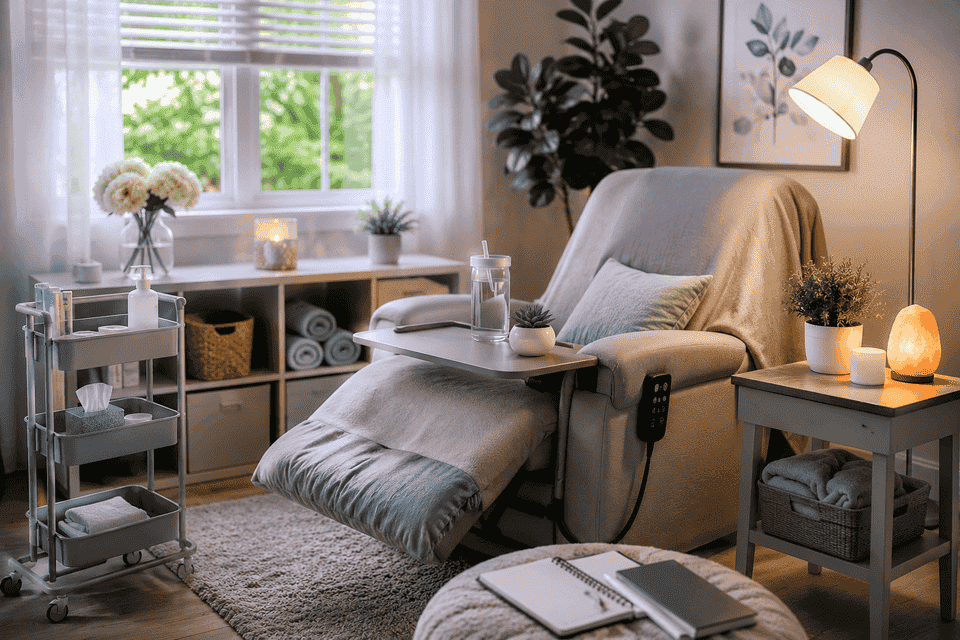
A well-designed recovery space ensures everything you need is close by. This way you do not have to bend, stretch, or lift things. Put a nightstand or side table next to where you sit or sleep. This will hold things you need every day. The nightstand should have your medicine, a water pitcher that you can refill, a cell phone with a long charging cable, a flashlight, ht and personal care items. This helps make you comfortable and reduces strain on your body.
You can use pillows or cushions to keep your body in the right position while you rest. You can also use tools, like a reacher or a button-hook aid. These tools help you do things on your own without hurting your body while it heals. They help you take care of yourself without worsening your healing joints or surgical incisions. You can manage your routines easily with these tools.
Managing Ambient Lighting, Sound, and Environmental Stressors
The atmospheric qualities of your recovery room profoundly impact your body’s ability to rest and repair damaged tissues. Scientific research shows that a quiet, peaceful place with light can help patients feel less stressed and more comfortable as they heal. Put your bed or chair near a window to get some daylight. Daylight helps your body get into a routine and can even improve your mood.
If you need to sleep during the day, you can use blackout curtains or a sleep mask to block out the light. To reduce noise, you can use a sound machine or listen to soft music. This can help block out noisy sounds and create a calm space for your body to rest. By doing this, your body and mind can relax deeply.
Establishing a Structured System for Household Support and Organization
Recovery from something like an illness or injury is not about the room you are in. You need a plan to keep track of your care and daily needs. It is a good idea to have a notebook or board in your room where you can write down when you need to take your medicine, which exercises you need to do, and when you have doctor appointments. If you have a lot to keep track of, it can be helpful to work with the team at PAM Health, who specialize in helping people recover after they have been sick or injured. They can help make your daily routine easier and make your family feel better. Having a plan helps the people who are taking care of you know what to do and when to do it. This way, they can help you without getting confused. If you make some changes to your home and stick to a routine, you can make your life easier and focus on getting stronger and healthier. Recovery is about getting your strength and mobility and feeling good for a long time.