
When your dryer starts taking too long to dry, stops heating, makes unusual noises, or will not start, the issue often comes from one worn or faulty component rather than the entire appliance. Parts like the heating element, thermal fuse, thermostat, belt, pulley, or door switch can all affect how well your dryer runs. In this guide, we’ll walk through the most common dryer problems, what to check first, and how the right replacement part can help bring your dryer back to normal performance.
1. Check for lint buildup and blocked airflow
Lint buildup is one of the most common reasons a dryer stops working properly. When the lint trap, vent hose, or outside vent is blocked, hot air and moisture cannot escape well. This can make clothes take longer to dry, cause overheating, or trigger safety parts like the thermal fuse.
How to fix: Start by cleaning the lint screen, then inspect the vent hose behind the dryer for lint buildup, kinks, or crushed areas. Make sure the outside vent opens properly when the dryer is running. If airflow improves but the dryer still takes too long to dry, the heating element, thermostat, or thermal fuse may need further inspection.
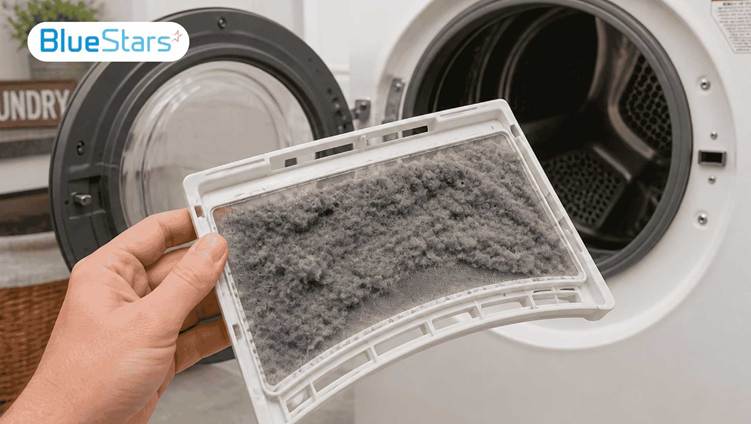
Lint buildup can block airflow and reduce drying efficiency (Source: Bluestars Parts)
2. Dryer takes too long to dry
A dryer that takes too long to dry usually has an airflow or heating issue. A clogged lint trap, blocked vent, weak heating element, or faulty thermostat can prevent the dryer from removing moisture efficiently, leaving clothes damp after a full cycle.
How to fix: Begin with the airflow path. Clean the lint trap after every load and check the dryer vent for blockage. If the vent is clear but drying time is still too long, check whether the dryer is producing enough heat. A weak heating element or thermostat issue may require a compatible replacement part.
3. Dryer runs but does not heat
When a dryer runs but does not heat, the drum may still turn normally, but clothes stay wet or only slightly warm. This issue may involve the heating element, thermal fuse, cycling thermostat, high-limit thermostat, or power supply.
How to fix: The safest first step is to check the lint trap, vent, and breaker. For electric dryers, a partial power issue can let the drum run while stopping the heating system from working. If airflow and power look fine, inspect the heating-related parts and replace any worn or failed component based on your dryer model number.
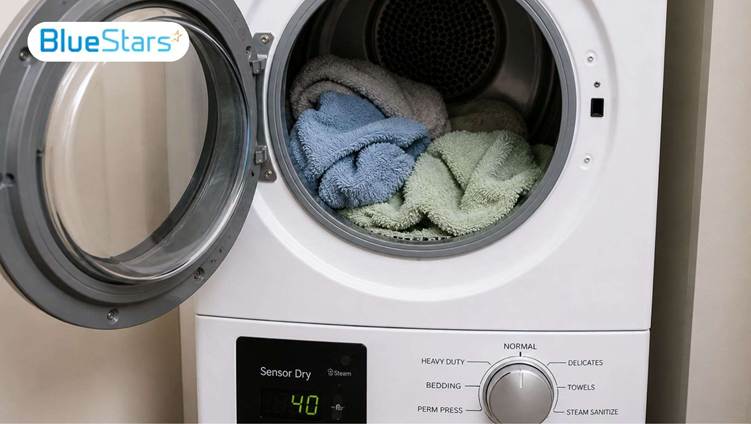
Dryer runs but clothes remain damp when there is no heat (Source: Bluestars Parts)
4. Dryer will not start
If the dryer will not start, the issue may come from the power supply, door switch, start switch, thermal fuse, or another safety component. A faulty door switch can stop the dryer from starting because the machine does not detect that the door is properly closed.
How to fix: First, make sure the dryer is plugged in, the breaker has not tripped, and the door is fully closed. If the dryer clicks but does not run, or has no response at all, the door switch, start switch, or thermal fuse may need inspection. Stop using the dryer and call a technician if you notice a burning smell, repeated breaker trips, or wiring damage.
5. Dryer makes loud or unusual noises
Loud thumping, squeaking, scraping, or grinding sounds often come from worn drum support parts. Common causes include a damaged belt, worn drum roller, bad pulley, or failing bearing. These parts help the drum turn smoothly, so noise can get worse when they wear down.
How to fix: Before replacing anything, check the drum for loose objects like coins, buttons, or zippers. If the noise continues during every cycle, inspect the belt, pulley, drum rollers, and bearing. Replacing worn parts early can help prevent extra strain on the drum and motor.
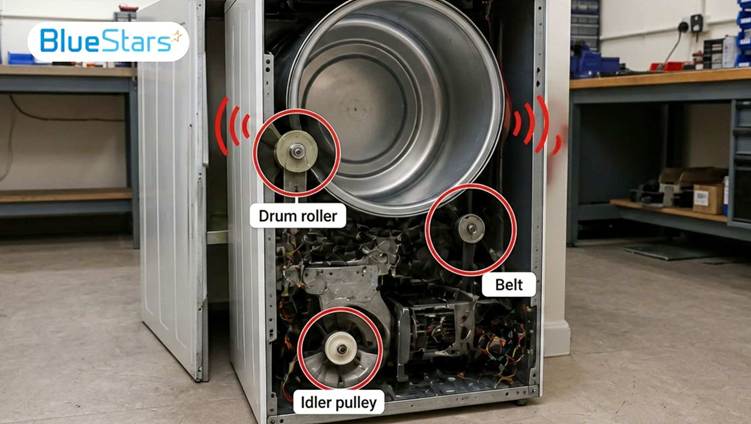
Worn drum parts can cause loud or unusual noises during operation (Source: Bluestars Parts)
6. When to replace dryer parts
Not every dryer problem requires a new part. Some issues can be fixed by cleaning the lint trap, clearing the vent, or checking the power connection. However, if the dryer still has no heat, takes too long to dry, makes loud noises, or stops mid-cycle after basic troubleshooting, one or more internal parts may be worn or faulty. Before buying dryer replacement parts, check your dryer model number and match it with the correct part number to make sure the replacement fits properly.
Before replacing anything, check these details first:
- The dryer model number and compatible part number
- Whether the part is cracked, burned, loose, or visibly worn
- Whether airflow and power supply issues have already been ruled out
- Whether the same symptom returns after basic cleaning or troubleshooting
- Whether the issue involves heat, safety, drum movement, or door detection
Choosing the right part helps restore dryer performance and reduce repeat repairs. If you need compatible components for common dryer issues, BlueStars Parts provides clear product information to help you find the right fit for your appliance model.
In conclusion, many dryer problems can be checked at home before calling a technician, especially issues related to airflow, heat, power, or drum movement. Cleaning the lint trap, clearing the vent, and watching for signs like no heat, long drying time, or unusual noise can help you identify the issue faster. If you need quality replacement components for common dryer issues, BlueStars Parts provides clear product information to help you choose the right part for your repair.
Contact information:
8 The Green, Ste A, Dover, Delaware 19901-3618, United States
Website: https://bluestarsparts.com/