Tree and shrub removal projects can dramatically improve the appearance and functionality of a property, but they also generate a surprising amount of debris. Even removing a few mature shrubs or a single large tree can produce piles of branches, trunks, leaves, roots, and other organic materials that quickly overwhelm a yard. Without a plan for handling this debris, cleanup can become one of the most time-consuming parts of the project.
For homeowners, understanding efficient disposal practices before work begins helps keep the property organized and allows the removal process to move more smoothly from start to finish.
Why Tree and Shrub Removal Creates So Much Waste
Many homeowners focus on the size of the tree or shrub being removed and underestimate how much material it will produce once it is cut apart. A mature shrub that occupies a small footprint in the landscape may generate a surprisingly large pile of branches when dismantled.
Trees create even greater volumes of debris. Limbs, trunks, leaves, and root systems all contribute to the total amount of material that must be handled. Once everything is cut down and separated, the debris often occupies far more space than the original plant.
Understanding this volume helps homeowners prepare realistic cleanup and disposal plans.
Planning Before Removal Begins
One of the most effective disposal practices is establishing a cleanup strategy before any cutting starts. Waiting until debris is already covering the yard often leads to disorganization and additional work.
Homeowners typically benefit from identifying where branches, logs, and root materials will be staged during the removal process. Creating designated collection zones helps prevent debris from spreading across the property and makes final disposal much more manageable.
A little planning early can significantly reduce cleanup challenges later.
Separating Different Types of Organic Debris
Tree and shrub removal generates several different categories of material. Branches, leaves, brush, logs, stumps, and root systems each present unique handling considerations.
Keeping these materials separated whenever possible often improves efficiency. Large logs can be stacked together, while smaller brush and branches can be consolidated into separate piles. Root systems and stumps may require different disposal methods due to their size and weight.
Organizing materials during removal reduces the amount of sorting required afterward.
Managing Branches and Brush Efficiently
Branches and brush typically account for the largest volume of debris during vegetation removal projects. Because these materials are irregularly shaped, they can consume a large amount of space if left scattered around the property.
Consolidating branches into centralized piles as work progresses helps maintain cleaner work areas and improves accessibility. Some homeowners trim larger branches into smaller sections to simplify handling and transportation.
Keeping brush under control throughout the project helps prevent the yard from becoming difficult to navigate.
Handling Logs and Larger Wood Sections
Tree removal often results in heavy trunk sections and large wood pieces that require special attention. These materials can be difficult to move once they are on the ground, particularly if they are left in place until the end of the project.
Many homeowners find it easier to relocate or organize larger wood sections immediately after cutting. Staging these materials in a designated area keeps pathways open and allows other cleanup tasks to continue more efficiently.
Managing large pieces early helps avoid unnecessary rehandling later.
Addressing Stumps and Root Systems
Removing stumps and roots introduces additional disposal challenges. Root balls often contain a mixture of soil, rocks, and organic material, making them both bulky and heavy.
These materials can occupy substantial space even after the visible portion of the tree or shrub has been removed. Homeowners who plan for stump and root disposal in advance are typically better prepared for the overall scope of the cleanup process.
Accounting for below-ground materials is an important part of comprehensive removal planning.
Maintaining Clear Access Around the Property
Tree and shrub removal often involves moving equipment, wheelbarrows, and debris across the yard repeatedly. Large piles of material can block pathways and make it harder to complete work efficiently.
Maintaining clear access routes throughout the project improves workflow and helps prevent delays. It also reduces the likelihood of damage to landscaping features that will remain in place after the removal is complete.
Organized debris management helps keep the project moving forward smoothly.
Creating a Centralized Disposal Area
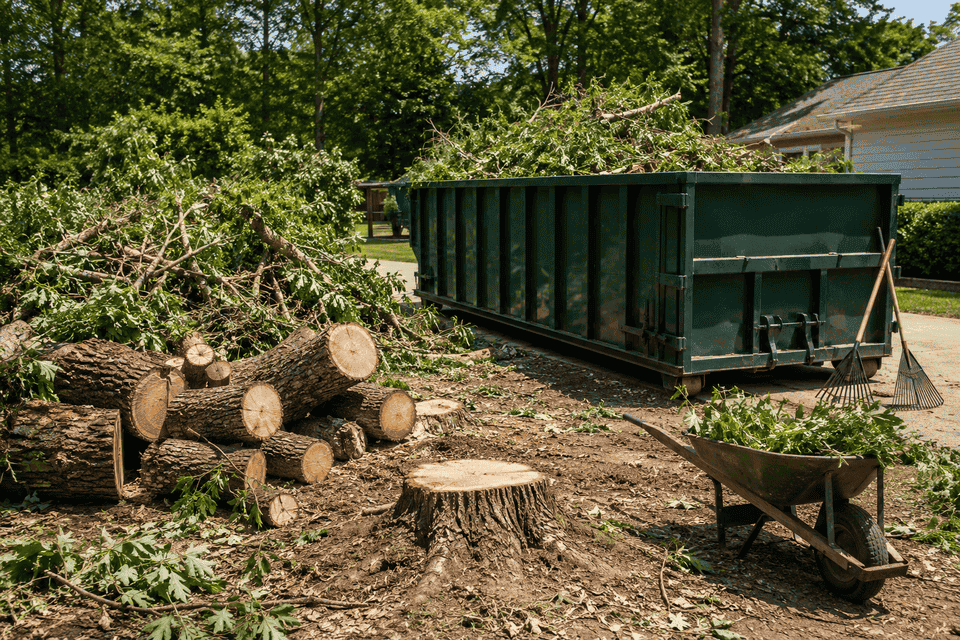
A centralized disposal area is one of the simplest ways to improve efficiency during vegetation removal projects. Rather than creating multiple piles throughout the property, debris can be directed to one primary collection location. For larger cleanup jobs, some homeowners choose a Temporary Dumpster to keep branches, brush, and other organic waste contained in a single area while work is underway.
Homeowners handling larger cleanup efforts may coordinate with providers such as Waste Removal USA alongside local disposal services to help manage the volume of organic debris generated during the project.
Centralized collection reduces clutter and simplifies final removal activities.
Improving Safety During Cleanup
Tree and shrub debris can create several safety concerns if it is not managed carefully. Sharp branches, uneven piles, and hidden stumps can create tripping hazards, while large logs may be difficult to move safely.
Regular cleanup throughout the project helps reduce these risks. Removing debris as it is generated improves visibility and creates a more controlled work environment for homeowners and contractors alike.
Safety often improves significantly when cleanup is treated as an ongoing process rather than a final step.
Preparing the Property for Its Next Use
Most tree and shrub removal projects are completed to make way for something new. Whether the goal is landscaping, construction, improved drainage, or simply creating more usable yard space, effective debris removal helps prepare the property for the next phase.
A clean site allows homeowners to evaluate the area more accurately and begin future improvements without leftover materials interfering with progress.
The transition from removal to installation becomes much smoother when cleanup is handled efficiently.
Tree and shrub removal projects generate large volumes of organic debris that require careful planning and organization. By separating materials, maintaining centralized collection areas, keeping access routes clear, and addressing cleanup continuously throughout the project, homeowners can manage removal work more effectively.
When efficient disposal practices are incorporated from the beginning, tree and shrub removal projects become easier to control, creating cleaner, safer, and more organized properties that are ready for future improvements.