

Spring cleaning gets plenty of attention. Spring adjusting gets far less, and it can make just as much difference to how a home feels day to day.
Through the cooler months, many households settle into a routine that suits winter. Curtains stay drawn a little longer. Blinds sit at a height that keeps the low sun off the television. Those settings do their job while the weather calls for them, but they often stay in place out of habit once the season turns, even though the light entering the house has changed.
So before thinking about new blinds or curtains, spend an afternoon adjusting and maintaining what you already have. In many cases, that resolves the problem, and where it does not, you will know which window needs attention and why.
Observe How Spring Sunlight Enters Each Room
The sun takes a different path as the season changes, which can alter how much light, glare and warmth a particular window receives. Whether it does depends on which way the window faces, how deep the eaves are, whether a tree or neighbouring building shades it, and how the glazing performs.
Rather than assuming, spend a few days paying attention. Note which rooms warm up and when, where glare falls and whether it lands on a screen or a chair you use, and which windows are behaving differently compared with a month or two ago.
Adjust the Blinds and Curtains You Already Have
Most homes have more adjustment available than they use.
If a blind has sat at the same height since autumn, try a different position. Raising it in a room that has become shaded, or lowering it partway to intercept afternoon glare, may resolve the issue without any need to replace anything.
Layers are worth separating too. Where a window has both a sheer and a blockout, using the sheer alone during the day and the blockout only at night gives a different result from leaving both partly drawn.
On Venetian blinds, the tilt is often more useful than the height. Angling the slats upwards directs light towards the ceiling and diffuses it through the room, which can soften glare while keeping the space bright. Closing them further gives more privacy instead.
Which setting suits you depends on the orientation of the window, how overlooked the room is, the weather and what you use the space for. A north-facing living room and a shaded kitchen want different things, and no single daily routine works for every household. Try a few settings deliberately rather than leaving winter’s arrangement in place by default.
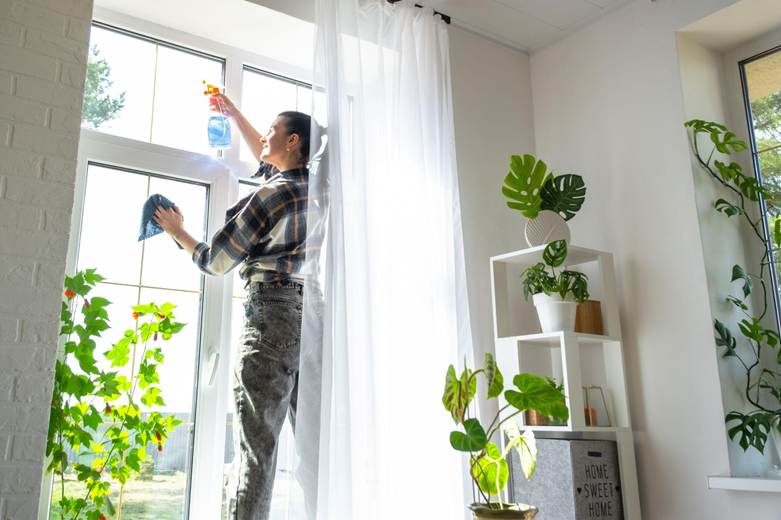
Clean the Windows and Furnishings First
Grime builds up gradually over winter, and because you look through it every day it is easy to stop noticing. Wash the glass, outside included, before deciding a room is too dark. It is common to conclude that a room needs lighter furnishings when the glass simply needs cleaning.
Then turn to the furnishings, and check the manufacturer’s care instructions first. Curtains, roller blinds, aluminium Venetians and timber products can all require different handling, and what suits one may damage another.
As a general approach, gentle dusting with a soft cloth, a duster or a vacuum brush attachment on low suction is the safest way to keep most window furnishings in good condition. Where a fabric is suitable for spot cleaning, keep it light and avoid saturating the material. If a blind has been dampened at all, let it dry completely before rolling or retracting it, since trapped moisture can cause marking. If you are unsure about a fabric or finish, ask the supplier rather than experimenting.
Clearing the tracks on sliding doors is worth doing too, as a season of grit is often why a door has started to feel heavy.
Repair Small Problems and Check Cord Safety
Most homes have a short list of things that do not quite work: a blind that no longer hangs level, a curtain hook that has pulled out, a bowed slat, a sticking track. They are worth attending to, because in practice they stop you using the window at all.
Damaged cords and chains are a different matter, and should not be treated as a small job to patch up. If a cord is frayed, a chain is damaged, or a mechanism is not working properly, stop using it and arrange an appropriate repair or replacement.
Cord safety deserves particular attention in any home with young children, where loose or accessible blind and curtain cords are a recognised strangulation hazard. Cords and chains should be secured with a properly installed cleat or tension device, fixed firmly to the wall or window frame so the cord is held taut, with no loose loop sitting within a child’s reach. Just as importantly, keep cots, beds, highchairs, sofas, bookshelves and anything else a child can climb well away from windows where cords are accessible. A cord out of reach from the floor may not be out of reach from the top of a chest of drawers.
If you are unsure whether an existing setup is safe, ask a qualified installer. Cordless and motorised options are available for households that would rather remove the risk altogether.
Reopen the Home for Cross-Ventilation
Winter furnishing decisions are mostly about keeping warmth in. Spring is a good time to think about moving air through the house instead.
Air needs somewhere to enter and somewhere to leave. Where the layout allows, opening windows on opposite or adjacent sides may improve airflow compared with opening several windows in one room. How well it works depends on the prevailing breeze, the size and position of the openings, the internal layout and what surrounds the house, so test a few combinations on a mild day.
When you do open up, raise or secure the window furnishings so they sit clear of the opening. A blind left halfway down can obstruct the airflow you are trying to create, and in stronger breezes an unsecured blind or curtain can move about, risking damage to the furnishing and to anything nearby.
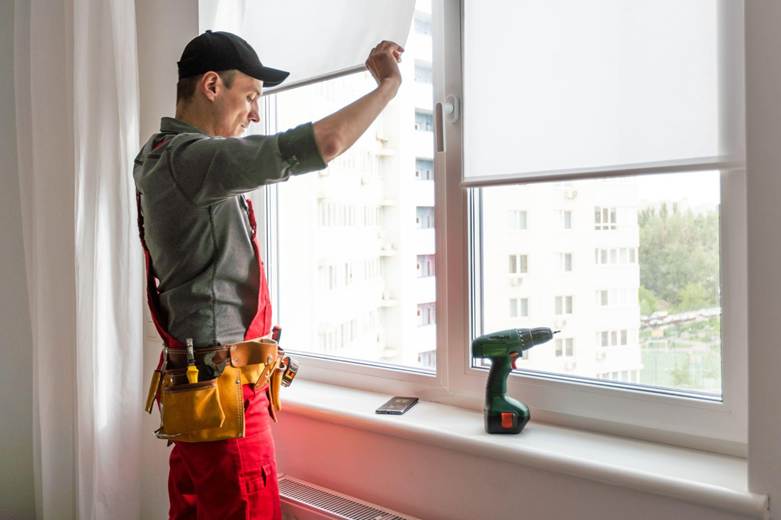
Replace Only the Window Furnishing Causing a Problem
If something does need replacing, deal with the one window causing the most difficulty rather than redoing the house. It helps to be clear about which problem you are solving, because glare and heat are not the same thing and do not always call for the same answer.
Glare is about brightness and contrast: light bouncing off screens, or a low sun in your eyes. Sunscreen and light-filtering fabrics can reduce glare while still admitting daylight and retaining some outward visibility, which is often preferable to blocking the window entirely.
Solar heat gain is a separate issue, and internal furnishings are only part of the picture. Depending on the orientation, the glazing, how the room is used and how much daylight you want to keep, the better option may be a denser internal fabric, a blockout, or external shading such as an awning or louvre, which intercepts the sun before it reaches the glass. West-facing windows are worth singling out, since low-angle afternoon sun arrives almost horizontally and is harder to manage with internal furnishings alone.
Roller blinds provide a compact way to manage light, glare and privacy. A double-roller configuration can combine a sunscreen or light-filtering blind with a blockout blind, allowing the window to be adjusted for different times of day. Whether that suits a particular window still depends on the orientation, the room and what you want from the space.
Whatever you are considering, take a sample home and hold it against the window at the time of day the problem occurs. Showroom lighting will not tell you how a fabric behaves in your own home.
Adjust First, Buy Second
Observe, adjust, clean, repair, check that cords are secure, then open the house up and see how air moves through it. Only after all of that is it worth looking at a replacement, and then only for the window still causing a problem.
Working in that order means any money you spend goes towards a problem you have identified rather than one you assumed you had.