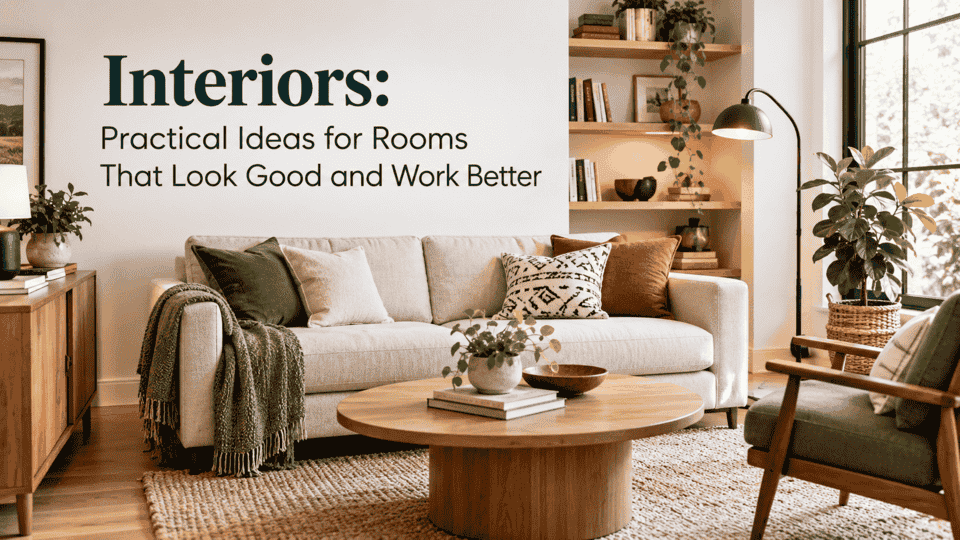
Most rooms don’t fail because of bad taste. They fail because of small practical misses: a sofa too big for the wall, a rug that floats in the middle of the floor, or a single ceiling light that makes the room feel flat at night.
PushYourDesign Interiors is about fixing those misses. This guide covers what push yourdesigncom offers, then walks through the measurements, color rules, and lighting habits that turn an ordinary room into one that looks good and works well every day.
What Is Push Yourdesigncom?
Push yourdesigncom, better known as PushYourDesign.com, is a home interiors website founded by Sophia Richards. Its blog publishes articles, tips, and ideas on topics such as sectional sofas, mattresses, decorative floor coatings, hobby rooms, and how design affects the way a space feels.
The site’s core idea is that every home is different, so interior design should be personal rather than copied from a showroom. PushYourDesign Interiors, then, is less a fixed style than a way of working: understand the room and the people in it first, then make design choices that support both.
Start With How You Actually Use the Room
Before choosing a single paint color, spend a week noticing how the room is really used. Where do people sit? Where do bags, shoes, and chargers pile up? Which corner stays dark in the evening?
Those answers shape everything else. A living room where children play needs durable fabric and open floor space. A bedroom that doubles as a workspace needs a desk that doesn’t face the bed. A kitchen where friends gather needs somewhere for them to stand without blocking the cook. The PushYourDesign Interiors approach starts here, with real habits rather than magazine photos.
The Measurements That Make Furniture Fit
Most layout problems come down to a few inches. These widely used guidelines help furniture feel right in the room instead of crammed in or lost:
| Guideline | Typical measurement |
| Main walkways | 30–36 in (76–91 cm) clear |
| Coffee table to sofa | 14–18 in (36–46 cm) |
| Sofa length | About two-thirds of the wall it sits on |
| Living room rug | Front legs of all main seating rest on it |
| Dining chair pull-out space | 36 in (91 cm) from table edge to wall |
| Art above a sofa | Bottom edge 8–10 in (20–25 cm) above the back |
Measure the room and sketch it on paper or a free planning app before you buy. Marking a new sofa’s footprint on the floor with painter’s tape is the quickest way to see whether it will crowd the space.
Use Color With a Simple Rule
If choosing colors feels overwhelming, the 60-30-10 rule gives you a starting structure:
- 60% main color: walls and large surfaces, usually a calm neutral or soft tone.
- 30% secondary color: larger furniture, curtains, or an accent wall.
- 10% accent color: cushions, artwork, vases, and small decorative pieces.
The accent is where you can be bold, because it is easy and cheap to change. Always test paint samples on two different walls and check them in both daylight and lamplight, since the same shade can look very different by evening.
Layer Your Lighting
A single overhead fixture flattens a room. Designers instead use three layers of light, each with its own job:
- Ambient light fills the room: ceiling fixtures, natural daylight, or recessed lights.
- Task light helps you do things: reading lamps, under-cabinet kitchen strips, a desk lamp.
- Accent light adds mood and highlights: picture lights, wall sconces, or a lamp on a bookshelf.
Warm bulbs around 2700K suit living rooms and bedrooms, while slightly cooler light around 3000–4000K works well in kitchens and home offices. Put ambient lights on dimmers where you can; it is one of the cheapest upgrades that makes the biggest difference.
Make Small Spaces Work Harder
In a small room, every piece of furniture needs to earn its place. A few PushYourDesign Interiors habits help:
- Raise furniture off the floor. Sofas and cabinets on legs show more floor, which makes the room feel larger.
- Go vertical. Tall shelving and wall-mounted storage free up floor space.
- Choose double-duty pieces. Ottomans with storage, extendable tables, and beds with drawers do two jobs at once.
- Hang curtains high and wide. Mounting the rod near the ceiling and past the window frame makes windows, and ceilings, look bigger.
- Place a mirror opposite a window to bounce natural light deeper into the room.
Add Personality, and Avoid These Common Mistakes
A room feels like home when it shows who lives there. Framed photos, books you have actually read, plants, travel finds, and handmade pieces add character that no store-bought set can. Group smaller items in odd numbers, such as threes, and vary their heights so the eye moves across them naturally.
Watch for these common mistakes:
- Pushing all furniture against the walls, which leaves an empty middle and makes conversation awkward.
- Choosing a rug that is too small, so the room looks disconnected.
- Buying everything from one matching collection, which can make a room feel like a catalog page.
- Hanging art too high; the center of a piece should sit roughly at eye level, about 57–60 in (145–152 cm) from the floor.
Frequently Asked Questions
What kind of content does PushYourDesign.com publish? The site focuses on home interiors, with blog articles and practical tips on furniture, flooring, bedrooms, hobby spaces, and how design affects the way a room feels.
Is PushYourDesign Interiors a specific design style? No. It is better described as an approach: design around how you live, then add style on top. It works for modern, traditional, and mixed interiors alike.
What is the easiest way to refresh a room on a small budget? Start with lighting, cushions, and rearranging existing furniture. Moving a sofa off the wall or adding two lamps often changes a room more than a new purchase.
How do I make a dark room feel brighter? Use light wall colors, add a mirror opposite the window, layer lamps at different heights, and keep window treatments light and high.
Final Thoughts
PushYourDesign Interiors comes down to a simple order of work: understand how the room is used, get the measurements right, then layer in color, light, and personality. Style matters, but a room only feels good when it also works.
You don’t need a full renovation to see a difference. Start with one room and one change, whether that’s a bigger rug, a second lamp, or a rearranged sofa. For more ideas and inspiration, browse the interior design articles on PushYourDesign.com.