
Key Takeaways:
- Connected thermostats can cut annual heating and cooling costs by 10–23%, making them one of the highest-ROI smart home purchases you can make.
- Smart lighting reduces lighting-related energy consumption by up to 30%, and smart plugs can eliminate 15–20% of phantom load waste with minimal upfront cost.
- Subscription fees are a hidden budget killer — always evaluate a device’s true cost by factoring in recurring cloud or monitoring plans before buying.
- Building room by room and prioritizing high-impact devices beats a rushed whole-home setup every time; strategy drives savings more than spend.
- Smart home users save an average of 30 minutes per day, which adds up to roughly 182 hours a year — a time dividend worth thousands of dollars when properly valued.
The phrase “smart home” still sounds expensive to a lot of people. It conjures images of custom installations, tech-bro gadget hauls, and monthly fees stacking up like a streaming service graveyard. But the reality in 2026 looks very different — and the numbers are starting to back that up in a big way.
Whether you’re trying to shave down your utility bill, claw back a few hours a week, or stop bleeding money on subscriptions you forgot you signed up for, a thoughtfully built smart home can genuinely deliver on all three. The key word there is thoughtfully. Tossing smart bulbs everywhere and calling it a day won’t move the needle. Strategy will.
Here’s how to actually do it.
The Energy Numbers Are No Longer Hype
If you’ve been skeptical about whether smart home tech actually cuts your energy costs, 2026 data is making a pretty compelling case.
According to Maker Stations’ 2026 Smart Home Market Trends report, connected thermostats alone can trim annual heating and cooling expenses by anywhere from 10% to 23% — and that’s by doing something deceptively simple: learning your occupancy patterns and syncing with utility demand-response signals. That’s not a marketing estimate; that figure comes from U.S. Department of Energy data cited through Mordor Intelligence.
To put it in dollar terms: if your household spends $2,000 a year on HVAC (which is close to the national average), you’re potentially looking at $200–$460 back in your pocket annually from a single device that costs $150–$250 to buy. The math works.
Meanwhile, on a broader scale, SQ Magazine’s Smart Home Statistics for 2026 reports that smart lighting solutions alone are projected to cut lighting-related energy consumption by around 30% in connected homes. The same report notes that 8.4 billion kWh of energy were saved globally in 2025 just through smart home automation — and that figure is only going up.
These aren’t fringe benefits. Energy management is currently the fastest-growing segment in the smart home market, with revenue expanding 77% between 2023 and 2028 in the U.S. alone. That kind of growth doesn’t happen unless the technology is delivering real results for real homeowners.
Start Room by Room — Not All at Once
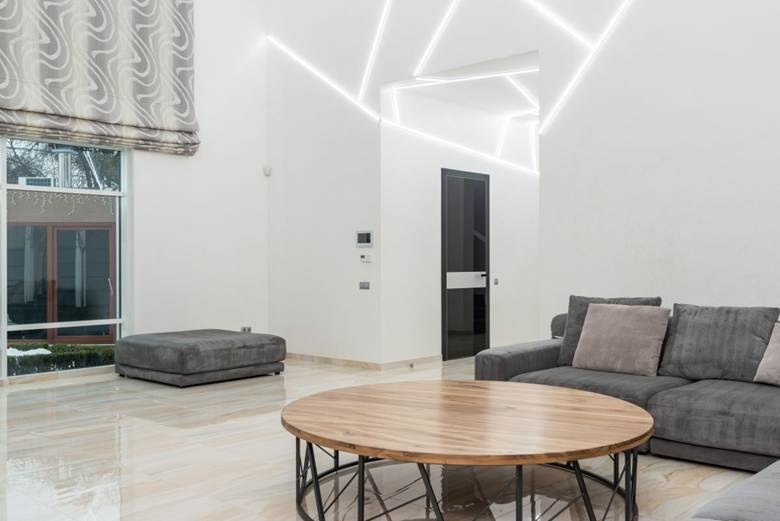
One of the most common mistakes people make when going smart is trying to automate everything overnight. That’s a fast track to overspending and under-utilizing. The smarter move — pun intended — is to think room by room and prioritize devices that have a genuine impact on your energy bill or daily time sink.
The living room and bedroom are usually where you’ll see the fastest returns on climate control (thermostat, smart plugs for standby devices), while the kitchen and laundry room often benefit most from scheduling and monitoring features. Not sure where to begin? This guide on which smart home devices to install in each room first walks through exactly that — giving you a prioritized, room-by-room framework so you’re spending money on devices that actually earn their keep rather than just look cool on a shelf.
The point isn’t to have a fully automated home by the end of the month. It’s to build toward one intelligently, letting each device pay for itself before you add the next layer.
Smart Plugs: The Underrated Heavy Hitter
Before you drop $300 on a fancy smart display or a connected appliance, consider the humble smart plug. It’s boring. It’s unglamorous. And it might be one of the most cost-effective purchases you make.
The reason comes down to phantom load — the energy your devices quietly drain even when you’re not using them. TVs in standby mode, gaming consoles left on rest mode, phone chargers sitting in the wall — they all pull power 24/7. According to SQ Magazine’s data, smart plugs and switches can reduce this kind of passive waste by 15–20%.
At around $10–$25 per plug, and with most households running anywhere from 20 to 40 devices that contribute to phantom load, a modest investment in smart plugs across key outlets can make a noticeable dent in your monthly bill — without requiring any complicated setup or hub ecosystem.
Pair them with automated schedules (a feature 41% of smart home users are already taking advantage of, per SQ Magazine’s 2026 data) and you’re essentially putting your savings on autopilot.
The Subscription Trap — and How to Avoid It
Here’s where a lot of smart home setups quietly fall apart: subscriptions. You buy a smart doorbell for $160. Then you find out the features you actually want — extended video history, person detection, package alerts — require a $10/month cloud plan. Multiply that across a security camera, a video doorbell, a smart lock, and a monitoring service, and you’ve got $40–$60/month in recurring costs that nobody factored into the original budget.
That’s $480–$720 per year, just to keep your gear functioning the way it was marketed to you at the store.
The fix is simple: make local storage and subscription-free functionality a purchasing criterion, not an afterthought. Several strong options now offer solid core features without locking the useful stuff behind a paywall. Eufy’s video doorbell, for instance, offers local storage as a standard feature. MQTT-based systems and Home Assistant setups give tech-comfortable users near-total control with zero monthly fees.
When you’re evaluating any smart device, ask yourself: what features am I actually losing if I decline the subscription? If the answer is “the basics,” walk away. If it’s “some nice-to-haves,” that’s a conversation worth having — but at least go in with eyes open.
Time Savings Are Real (and Worth Quantifying)

The financial pitch for smart homes often focuses on energy, but the time angle deserves more attention than it gets.
According to Market.biz’s 2026 Smart Home Statistics report, 57% of Americans say smart home products save them roughly 30 minutes per day. Extrapolated over a year, that’s around 182 hours — close to a full work month returned to your life.
Now, 30 minutes a day won’t feel like much on any given Tuesday. But those minutes add up in real ways: fewer trips back home because you forgot to lock the door, no more manually adjusting the thermostat before bed, not having to stand in the laundry room waiting for a cycle to finish. Automation handles the friction so you don’t have to.
If you value your time at even $15/hour (well below average for most working adults), 182 hours annually is worth nearly $2,700. Smart home tech that costs $500–$1,000 upfront and saves you that much in time and energy in year one isn’t a luxury purchase — it’s a reasonable investment.
Build an Ecosystem, Not a Collection
One thing that kills both savings and sanity in smart home setups is buying devices that don’t play well together. You end up with four different apps, three different voice assistants, and no way to create the cross-device automations that actually make the whole thing useful.
The Matter protocol has been a game-changer here. As of 2025, Matter 1.2 adoption hit 40% across devices, and compatibility between brands is improving steadily. When you’re shopping, prioritize Matter-certified or Works With Google/Alexa/HomeKit compatibility. This lets you build routines that actually span your whole home — like setting a “leave” scene that turns off all lights, locks the door, drops the thermostat, and cuts power to standby outlets with a single tap.
That kind of whole-home coordination is where the real efficiency gains live. Individual devices are nice. A coordinated ecosystem is where the savings compound.
Closing Thoughts
A smart home in 2026 isn’t about having the flashiest gadgets. It’s about eliminating energy waste, automating the tedious stuff, and making purchasing decisions that don’t saddle you with unnecessary recurring costs.
The data is clear: with connected thermostats potentially saving 10–23% on climate costs, smart lighting cutting energy use by up to 30%, and the average smart home user saving close to $1,180 per year, the ROI is real — if you build strategically.
Start with the highest-impact rooms and devices. Treat subscription fees as part of the device’s true cost. Choose ecosystems over collections. And give yourself permission to do this gradually — because a smart home built thoughtfully over six months will outperform one cobbled together in a weekend every single time.