Key Takeaways:
- Lighting is one of the most affordable and highest-impact upgrades in a small kitchen — it shapes how large or cramped a space feels, not just how well you can see.
- A three-layer lighting system (ambient, task, and accent) is the professional standard in 2026 and far outperforms any single-fixture setup.
- Under-cabinet LED strips are the single most impactful addition for small kitchens, with 82% of industry pros flagging them as a top trend and 70% of homeowners reporting a real improvement in kitchen functionality after installing them.
- Directing light toward walls and using interior cabinet or cove lighting creates a visual perception of more space — a critical trick when you can’t physically expand the room.
- Smart lighting systems are now accessible and affordable (some under $50), making flexible, dimmable, multi-scene lighting a realistic option even on a tight renovation budget.
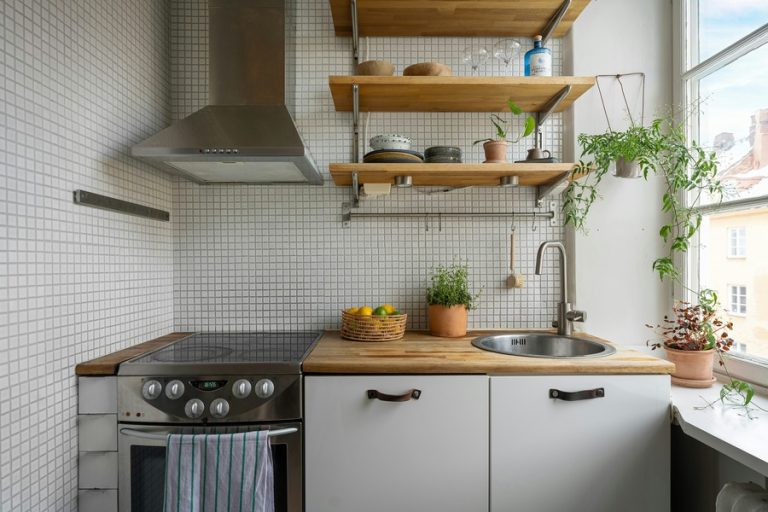
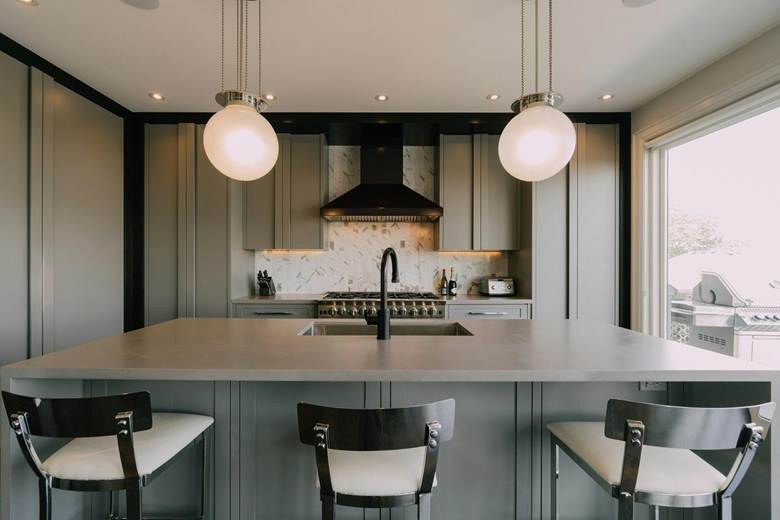
Most small kitchens are fighting an uphill battle. You’re squeezing a refrigerator, range, sink, and a few feet of counter space into a room that probably wasn’t designed with a home chef in mind. And the lighting? More often than not, it’s an afterthought: one lonely overhead fixture casting flat, shadowy light over everything.
Here’s the thing: lighting is one of the cheapest and most impactful upgrades you can make in a small kitchen. Done right, it can make your space feel twice as big, highlight every inch of counter real estate, and actually make cooking easier. Done wrong, it’s just an expensive way to keep the dark corners company.
So let’s talk about how to get it right — backed by real 2026 data and practical strategies you can actually use.
Why Lighting Feels Like a Small Deal But Isn’t
Here’s a mindset shift worth making: in a small kitchen, lighting isn’t just about visibility. It’s about perception. The way light moves through a space — where it pools, where it bounces, where it gets absorbed — directly affects how large (or cramped) that space feels to the human eye.
Dark corners make rooms feel smaller. Harsh overhead lighting flattens everything out and makes surfaces look dull. But layered, strategic lighting? That’s where the magic happens. It creates depth, draws the eye outward, and makes a compact kitchen feel intentional instead of just small.
And the industry data is starting to reflect exactly that.
According to the National Kitchen & Bath Association’s 2026 Kitchen Trends Report — a survey drawing from more than 600 industry professionals across North America — lighting is a near-universal priority for homeowners, with 95% citing natural light as critical, 93% placing a premium on overall lighting quality, and 92% identifying task lighting in work zones as essential to a well-designed kitchen. Beyond those broad priorities, under-cabinet lighting leads the pack of trending fixture types at 82%, followed by interior cabinet lights at 72% and pendant lights at 63%.
That’s not a fringe trend. That’s a clear signal from designers, remodelers, and architects that the lighting approach in kitchens is fundamentally shifting — and small kitchen owners stand to gain the most from it.
The Three-Layer System That Changes Everything
If you take one thing from this article, make it this: stop relying on a single light source.
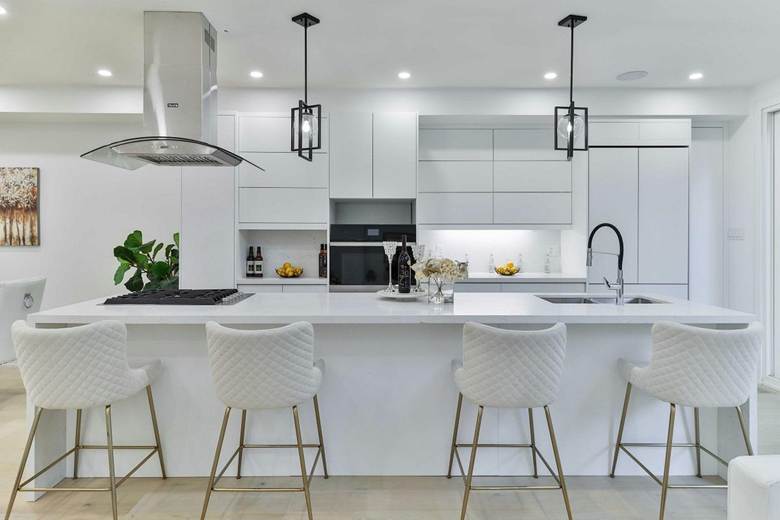
A proper small kitchen lighting plan is built in layers, and each layer has a job to do:
- Ambient Lighting is your base layer — the general glow that fills the room. In most kitchens, this is recessed lighting or a flush-mount ceiling fixture. For small kitchens, recessed lights installed closer to the perimeter (rather than dead-center) push light toward the walls, which visually expands the space.
- Task Lighting focuses on the places where you actually do things — your countertops, the stove, and prep areas. This is where under-cabinet lighting earns its reputation as a small-kitchen game-changer.
- Accent Lighting is the layer most people skip, and they’re leaving a lot on the table. Interior cabinet lighting, toe-kick LEDs, and shelf lighting create a sense of depth and warmth that no overhead fixture can replicate. It also highlights storage — which is a clever way to make a small kitchen feel like it has more going on.
These three layers work together to eliminate flat, one-dimensional lighting and replace it with something that feels both polished and practical.
Under-Cabinet Lighting: The Workhorse You’re Probably Underestimating
Let’s dig into the layer that’s generating the most buzz in 2026: under-cabinet lighting.
The concept isn’t new, but the data behind its impact definitely reinforces why it keeps showing up at the top of every designer’s recommendation list. A 2026 survey covered by The Modern Kitchen Ideas found that seven in ten homeowners who installed under-cabinet lighting said it meaningfully improved how their kitchen functions day-to-day — and research suggests the primary driver is reduced eye strain, since the focused illumination lands directly where it’s needed most.
Think about what that means in a small kitchen context. You’ve got limited counter space, which means every square inch of that counter is getting used — for chopping, plating, prepping coffee, whatever your routine looks like. Shadow-free task lighting isn’t a luxury in that environment. It’s a functional necessity.
The good news is that the format has gotten a lot more refined. Slim LED strip lights are increasingly replacing older puck-style fixtures because they throw a more even wash of light across the countertop without creating hot spots or awkward shadowed patches. They’re also low-profile enough that they visually disappear — which matters in a small kitchen where clutter (even the visual kind) works against you.
For color temperature, most designers in 2026 are landing in the 2700K–3000K range for under-cabinet applications. That’s a warm white that feels inviting without washing out the colors of your food or your finishes.
Making a Small Kitchen Feel Bigger: Tricks That Actually Work
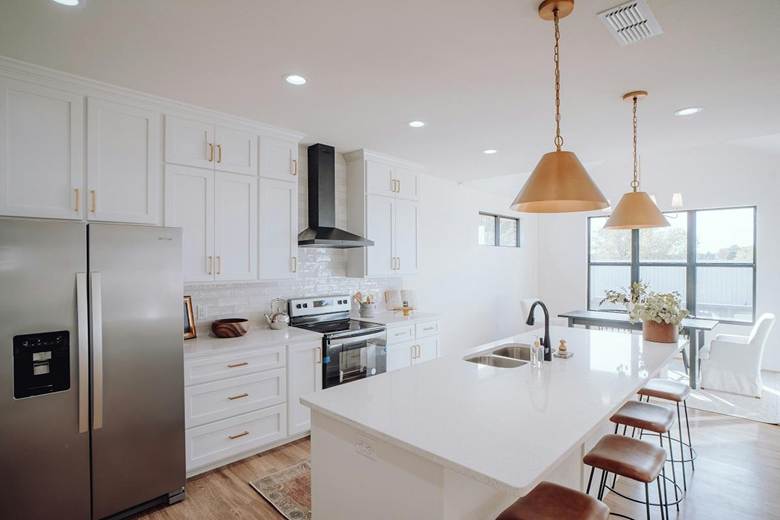
Lighting can’t knock down walls, but it can absolutely fool the eye. Here are the specific strategies that make the biggest difference in compact spaces:
Push light to the perimeter.
Light directed toward walls makes a room feel wider. Cove lighting above upper cabinets (a strip of LEDs tucked above the cabinet tops and facing upward) bounces light off the ceiling and creates an airy, high-ceiling effect even in kitchens with standard eight-foot clearance.
Use vertical light to draw the eye up.
Interior cabinet lighting — especially in glass-front cabinets — creates a tall, layered visual that makes the room feel more spacious vertically. This is one of the reasons the NKBA data shows interior cabinet lighting trending so strongly in 2026.
Eliminate harsh shadows.
Nothing makes a small space feel more cramped than heavy shadows. Using multiple lower-intensity light sources instead of one bright central fixture eliminates that “cave” feeling.
Choose warm, not cool.
Cooler, blue-toned light can feel clinical and tends to flatten surfaces. Warmer tones (under 3000K) add perceived depth and make finishes like wood and stone look richer — which creates the illusion of a more layered, expansive space.
Don’t forget the toe-kick.
LED strips along the base of your cabinets create a floating effect that visually lifts the cabinetry off the floor. It sounds subtle, but in a small kitchen, it genuinely makes the footprint feel larger.
Smart Lighting in Small Kitchens: Worth It or Overkill?
There’s a good argument for smart lighting even in the most modest kitchen footprints. In 2026, smart systems go well beyond basic on/off control — fixtures can now respond to voice commands or app-based gestures, and programmable schedules allow brightness, color temperature, and beam direction to shift automatically throughout the day.
For a small kitchen, that kind of flexibility is actually a bigger deal than it sounds. You might want bright, cool task lighting at 7 a.m. when you’re making breakfast and warm, dimmed ambient lighting at 7 p.m. when you’re entertaining. A smart system makes a one-tap switch instead of a manual juggling act.
The cost has also dropped significantly. Plug-in smart strip lights that work with Alexa or Google Home are widely available for under $50, making them one of the most accessible upgrades in a small kitchen refresh. If you’re planning to tackle a broader update — swapping out cabinets, changing your layout, or rethinking your storage — you’ll want to think about how lighting integrates with all of those decisions. This guide to compact kitchen remodeling trends for 2026 covers how lighting fits into the bigger picture of a small kitchen transformation, including which upgrades tend to deliver the most return on a tight budget.
Fixture Choices That Work Hardest in Compact Spaces
Not every fixture is a good fit for a small kitchen. Here’s a quick breakdown of what works — and what to think twice about:
Recessed lights:
Great for ambient and task layers. Choose smaller trims (3–4 inch) to avoid overwhelming a low ceiling. Space them closer to walls for perimeter light effect.
Pendant lights:
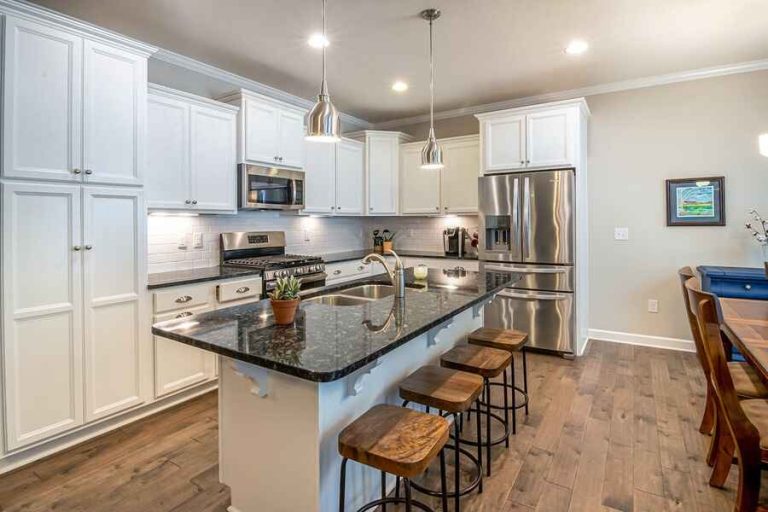
Can work beautifully over a small island or peninsula, but scale matters. One larger statement pendant usually reads better than two small ones in a tight space — it looks intentional rather than busy.
Under-cabinet strips:
As we’ve covered, these are the backbone of any small kitchen lighting plan. Go for linkable LED strips so you can cover an entire run of cabinets seamlessly.
Flush-mount ceiling fixtures:
Fine as a base ambient layer, but don’t let them be your only layer. They’re a starting point, not a finish line.
Sconces:
Often overlooked in kitchens, but a well-placed sconce near an open shelf or a window can add warmth and height without taking up any counter or floor space.
What to avoid: Oversized pendants that crowd the sightline, exposed bulb arrays that glare at eye level, and anything that creates strong downward shadows over countertops.
A Simple Small Kitchen Lighting Plan
Here’s a basic template to start from, adaptable to almost any small kitchen layout:
- Start with recessed ambient lights, ideally dimmable, positioned toward the perimeter rather than centered. For a typical galley or L-shaped small kitchen, two to four recessed cans is usually enough.
- Add under-cabinet LED strips across every run of upper cabinets that sits above a work surface. This is non-negotiable if you care about function.
- Layer in interior cabinet lighting if you have glass-front cabinets or open shelving — it creates depth and makes the room feel curated rather than cluttered.
- Finish with an accent or statement piece — a single pendant over a peninsula, a sconce near the window, or toe-kick LEDs along the base — to give the space personality and that final sense of visual expansiveness.
Keep all layers dimmable if possible. That single feature gives you more flexibility than any other lighting decision you’ll make.
Closing Thoughts
Small kitchens don’t have to feel small. And while paint colors, mirrors, and open shelving all get their share of the credit for making compact spaces feel bigger, lighting is arguably the most powerful tool in the room — and consistently the most underutilized.
The 2026 data from the NKBA is pretty clear: the professionals designing kitchens for a living have rallied behind layered lighting, under-cabinet fixtures, and interior cabinet illumination as the direction the industry is heading. And the homeowner feedback data backs that up — people who invest in targeted lighting almost universally say it made their kitchen work better.
If you’re working with a tight space, you don’t need to blow the budget to make a meaningful difference. A set of LED strips under the cabinets, a pair of dimmable recessed lights, and a single statement pendant can genuinely transform how a kitchen looks and feels to work in. Start there, and build from what you’ve got.